

Welcome to this edition of Wayward Things. This issue is the first in a two part series, exploring how divination—although seemingly weird—might nevertheless constitute an art of choosing well, and may offer a productive means of navigating our way through what philosopher Ruth Chang calls ‘hard choices.’
A Busy Weekend in the Temple
If you go to any reasonable-sized Taiwanese temple at the weekend, you will see crowds of people kneeling before the shrines of the gods, asking for advice on the most pressing problems in their lives. There, in the incense-steeped half-light of the temple—among the gold leaf, the elaborate carvings, and the paintings—temple visitors throw small, red-coloured, croissant-shaped blocks of wood called poe. They ask questions about the big choices they face: whom to marry, which job to choose, whether to move overseas, or what to do with their troublesome relatives. The wooden blocks clatter to the ground, and on the basis of how the blocks fall, the gods provide answers to life’s most burning questions.
In Taiwanese, this asking the advice of the gods, is called mn̄g-sîn 問神 (Mandarin wènshén), and it is an accepted part of Taiwanese life. When faced by hard decisions, the temple is often the first port of call. And when I come up against some particularly tricky life choice, Taiwanese friends will often be ready to offer advice on which god I should seek guidance from, and how.
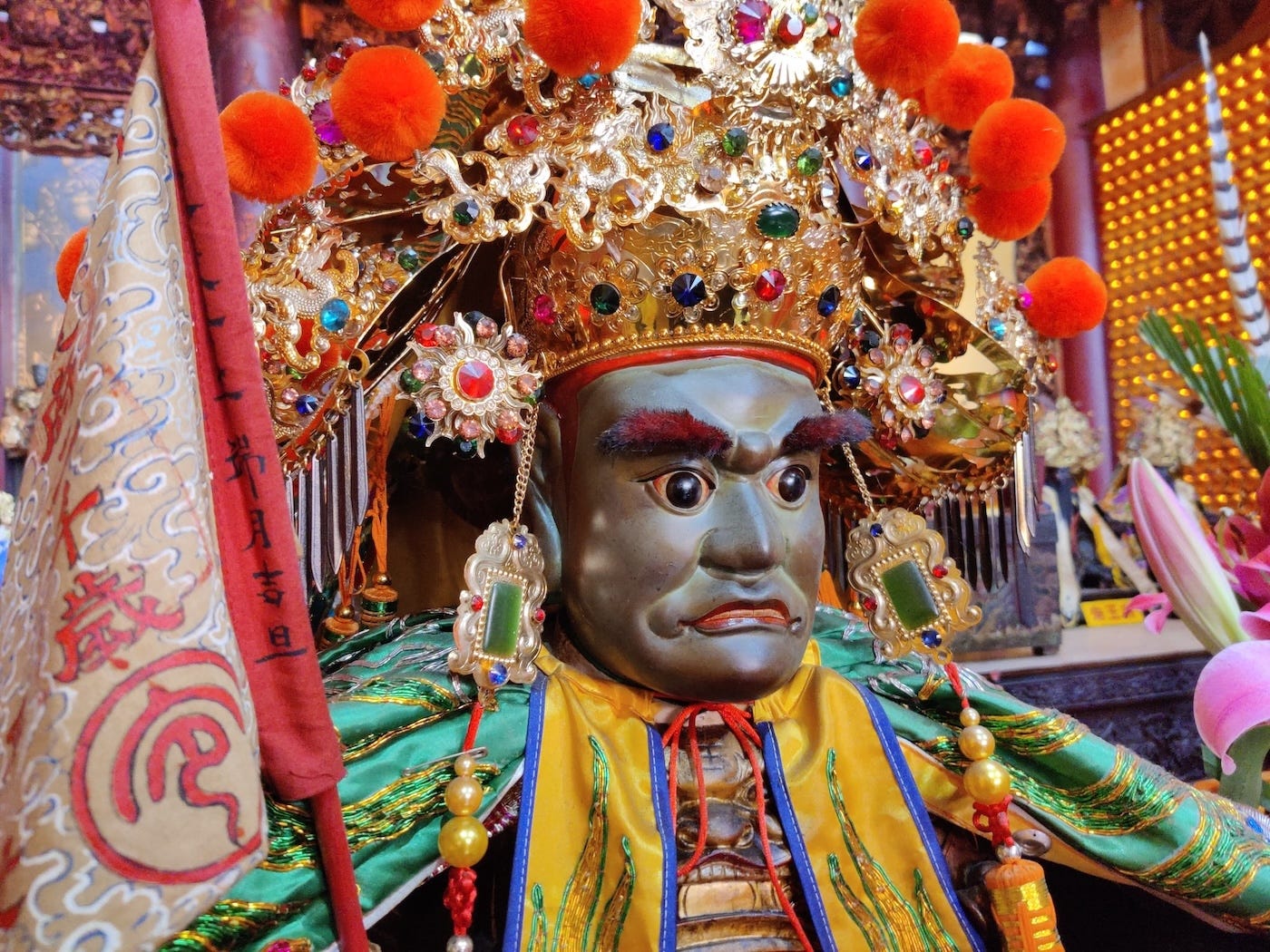
The kinds of choices the gods are believed to be particularly useful in helping us resolve are those choices that are not, on the surface, obvious (why bother the gods with something the answer to which is obvious?), and that are, at the same time, existentially charged, or that have high stakes (why bother going to the trouble of divination if the stakes are low?).
In this piece, and in the one that follows, I want to ask why, for many in Taiwan, divination is such a compelling response to these kinds of hard but existentially significant choices. But more than this, I also want to argue that divination may persist, in Taiwan and elsewhere because—however irrational and strange it may seem on the surface—it can contribute a lot to the art of choosing well.
The Difficulty of Choosing
Here, I’m going to look at what it means to face existentially significant hard choices, while a forthcoming piece, I’ll spend more time talking about divination itself. I take the idea of hard choices from the philosopher Ruth Chang (the link goes to her paper on the topic, and if you are interested, you can also watch her very entertaining Ted Talk). Hard choices, for Chang, are choices that have the following three characteristics.
one alternative is better in some relevant respects
the other alternative is better in other relevant respects, and yet
neither seems to be at least as good as the other overall—that is, in all relevant respects.1
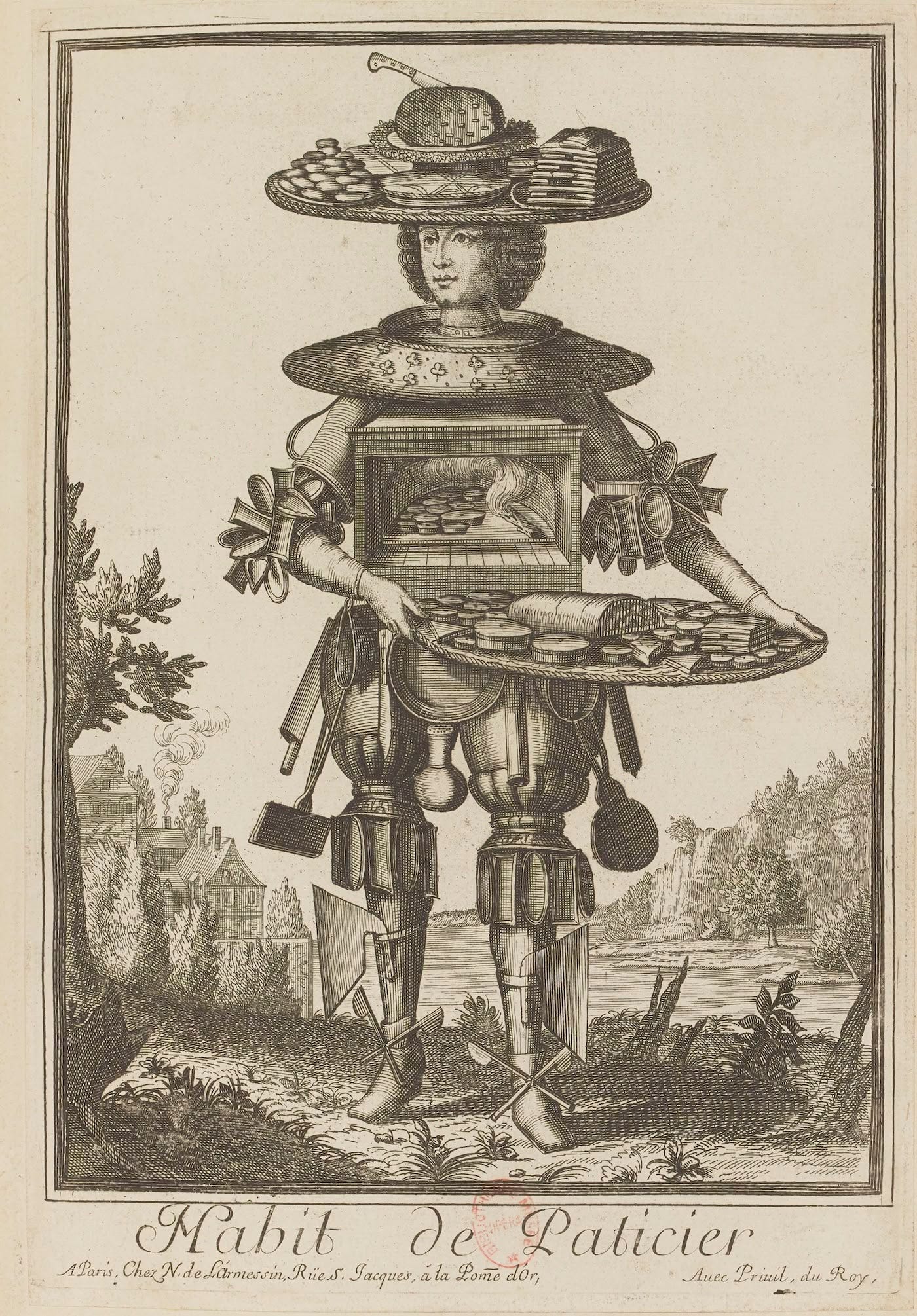
Hard choices might include, for example, big existential choices like, ‘Do I become a hermit, or do I train as a pastry chef?’ Or they might include smaller, but equally hard choices, such as whether to go for the starter or the dessert.2 In either case, the choices are hard because each option seems better than the other in some relevant respects, and yet neither seems to be at least as good as the other in all relevant respects.
For Chang, smaller hard choices are illuminating in that they show us how we might navigate bigger hard choices. And her argument here is both fun and interesting. But my main interest here is in those hard choices that are big and existentially consequential: choices like ‘hermit or pastry chef?’, rather than choices like ‘starter or dessert?’ How do we navigate choices like this?
Maybe we start by imagining ourselves as mountain-dwelling hermits, sitting in the deep silence of solitude. The picture is undeniably attractive. But then we go on to imagine ourselves as pastry chefs, cooking up a storm in a flour-strewn kitchen, only to find that this picture is equally attractive. So we reflect some more. And the more we reflect, the more it becomes clear to us that being a hermit will be better in some respects, and being a pastry chef will be better in others, and the more it also becomes clear that neither is at least as good as the other overall.
So how do we decide? How do we make up our minds when both options seem to be on a par?
.jpg)
For Chang, the interesting thing about hard choices is that no amount of thinking can get us there. We can engage in deep thought, we can ask our friends, we can do our due diligence, we can engage in moral reflection, we can write endless ‘pros and cons’ lists, we can think about things from every which way. But still, we end up without having resolved anything. The central issue remains: here are two very different choices, leading to two very different forms of life, and, as far as we are concerned, neither one is obviously better or worse than the other.
Making Up Our Minds, Making Up Our Lives
Making up our minds when faced by hard choices may seem to be burdensome and difficult. However, Chang reminds us that hard choices are also pretty great. If, when faced by a hard choice, we cannot reason our way to an obvious outcome, this implies our life is not entirely bound by brute facts. If we find that all of our reasoning has run its course until there are no more reasons left, and if we still can’t decide, then we can get to do something pretty fun: we can get to create new reasons of our own. As Chang puts it, when you are faced with hard choices, you can ‘reflect on what you can put your agency behind, on what you can be for, and through hard choices, become that person.’3 In this way, hard choices make us what and who we are.
This account of hard choices is both persuasive and attractive. But I think it misses out on a couple of important things. The first thing is that, as Chang rightly notes, existentially significant hard choices are about becoming something or becoming a particular kind of person. But this means that hard choices are not just about making up our minds, but they are about making up our lives. This becoming is not something that can be accomplished in a single moment of choosing. Instead, it involves a commitment to a trajectory that will unfold far into the future. We launch ourselves onto this trajectory, and we plot a new path through the world—one that involves a myriad of further choices, diversions, side-quests, dead ends, setbacks, and moments of serendipity. In this process, what is crucial is not just the moment of initial choice, but how we hold to the choice we have made, as we go on cobbling together our new, emerging identity, our new idea of ‘what we can be for.’ Choice is not just a one-time thing. Instead, it involves the tenacity that keeps us on course, through all the vicissitudes of life.
The second thing this account misses is that our agency in choosing cannot be meaningfully reducible to rational agency. Chang’s argument about rational agency is pretty neat. She says that a good account of rational agency is one where we are not just ‘recognizing reasons and then responding to them appropriately’, but where we are also creating reasons. If we do not have the power to create or own reasons, after all, where is the agency? But while this argument does add something to the idea of rational agency, I’m not convinced that rational agency should be the gold-standard for an agency worth having. After all, when I look back over the past half century, and think of my own agency as I have steered an erratic course through the world—as when I think of the agency of people around me—I’m not sure I would characterise this agency as wholly rational. Nor would it have been obviously enhanced (or not all the time) by being more rational. So here, I want to propose that, when thinking about the hard but existentially significant choices we make, and the ways in which we tenaciously seek to bring them to fruition, what matters more than rationality is ingenuity. Our use of reason is, no doubt, a part of what makes us ingenious. But ‘ingenuity’ has a broader scope, and in this way, better reflects the spread of skills we need to realise those hard choices.
Imagine, for example, that I have two friends, May and Maisie. May is very rational, but she is unfortunately not very ingenious. Maisie, on the other hand, is very ingenious, even though she is not always rational. If they were both to embark upon the journey of becoming a hermit or a pastry chef, my money would be on Maisie as the one who would be most likely to attain to her eventual goal. Her ingenuity may involve the judicious deployment of reason when reason is called for, but reason is only one of the things in Maisie’s bag of ingenious tricks. May, on the other hand, has less to work with because in her bag there is only one thing: reason.
Navigating Hard Choices, with Tenacity and Ingenuity
So what I want to argue here is that when faced by hard choices, instead of momentary choosing, we should think more about tenacity. And instead of reason, we should think of ingenuity. And this is important for how we think about divination, because I’m going to go on to make the case that divination is a kind of tenacious practice of ingenuity—one that seriously augments our capacity to satisfyingly make hard choices.
Here, I am taking the idea of tenacity from the philosopher François Jullien. In his book From Being to Living: A Euro-Chinese lexicon of thought, Jullien contrasts Western and Chinese philosophical notions of choice. He argues that while Western traditions focus on the Will and the moment of choosing, in Chinese traditions it is ‘less a question of the heroic capacity of a moment than of that of persevering over time, without stopping or giving up, without allowing oneself to lose heart, this is a matter of what I would call—in the most literal sense—“tenacity”.’4
The Chinese term Jullien translates as ‘tenacity’ is 持 (pronounced chí in contemporary Mandarin), literally meaning ‘to grasp’ or ‘to hold.’ In bringing our existentially significant hard choices to fruition, we don’t just make our choice and find that—lo!—this choice is realised. Instead, we form and take hold of an intention, then we hold firm to this intention through all the slippery, changing vicissitudes of life, and step by step, we make real our intention. Whether it takes a month, a year, or a decade, what gets us there, what makes the choice something that is effectual and meaningful, is tenacity. As the Confucian philosopher Mencius (孟子) writes, ‘It is intention that is the utmost, and the spirit is secondary. And so it is said: hold firm to your intention, and do no violence to the spirit’ (夫志至焉,氣次焉。故曰:「持其志,無暴氣」).5
What this idea of tenacity does is externalise our existentially significant hard choices. Our hard choices are no longer things that are just happening in the black box of our minds. Instead, they are things that are happening—and go on happening—out there in the world. That is to say, for choosing to be effective, it must involve ongoing practices of tenacity, as we navigate through this uncertain world to bring our choices more into being.
This tenacious, ongoing process is also why ingenuity trumps rationality. Because for one who is tenaciously pursuing some end, reason, reasoning, and rationality are only some of the things we might have in our bag of ingenious tricks. There may be other things too, only obliquely related to reason, or even quite unrelated, that will help us get where we are going. Think about the bodily disciplines of becoming a pastry chef (you need strong arms) or becoming a hermit (you need to learn to endure the morning chill on the mountainside). Think about the cultivation of friendships, the webs of social connections and care, that can help bring our intentions to fruition. Think about the forms of play, or unreason, or curiosity, or invention, or artfulness we might need to cultivate if we are to become the person we intend to become. All of this is ingenuity, and although none of it is obviously unreasonable, not all of it is reducible to reason.
Ingenuity, perhaps, feels like a more ambivalent value than reason. It’s quite easy to say that reason is always a good thing. But this is less the case with ingenuity. So it is not surprising, perhaps, that in the Chinese philosophical tradition, the equivalent term—qiǎo (巧)—is far from being considered a wholly positive value. Confucius, for example, disapproves of those who are 巧言 (qiǎoyán), those who are ingeniously or glibly skilful with their words. Zhuangzi, too, is both admiring and suspicious of the ingenious and the skilful. Yet, at the same time, Mencius tells us that ‘wisdom may be compared to ingenuity’ (智,譬則巧也).6 That’s not to say that ingenuity is always wise, or that the two things are the same. But it is to say that wisdom can be compared to—and has some of the characteristics of—ingenuity.
But this idea of ingenuity is also useful because it helps us answer a question that Chang doesn’t answer (or not that I can see). And the question is this: if hard choices are those choices where reasons run out, and where we get to make up our own reasons, how do we do this? How are these new reasons born? Out of what?
And this is where I think we need practices of ingenuity—big, capacious bags of ingenious tricks—because these help us in the production of new reasons, or candidates for new reasons. These practices may range from play to the cultivation of friendships, from the making of art to the practice of divination. While these practices may involve many things that are not in themselves rational, it is precisely these kinds of ingenious things, when our reasons and reasoning have run out, that can be richly productive of new reasons.7
Divination and the Gamification of Choosing

So what is happening when friends in Taiwan use divination as a way of navigating hard choices? They are mustering their tenacity and ingenuity to respond to hard choices so that they can not only make up their minds, but also make up their lives in new and worthwhile ways.
Next time, I’ll go more deeply into poe divination, and suggest that we can think of divination as a kind of gamification of choosing, one that (like all games that are more than just a matter of chance) requires both tenacity and ingenuity. Seeing divination like this—as gamified choice—may open us up to the possibility of finding new ways of navigating the hard choices we all sometimes face.
But that’s all for this time: it’s been a long one, and so I will end here. Besides, given that I’m currently also preoccupied with searching for a new place for us to live, I have an appointment at the temple with the earth god, thó͘-tī-kong 土地公 (Mandarin tǔdìgōng). I’m reliably told that he is the very best god to ask, if I want assistance with the hard choices of where to move to, and when, and how to best wrangle Taiwanese real estate agents.
If You Enjoyed This…
Wayward Things is a free newsletter run by Dr Will Buckingham. If you enjoyed this, then please share it with others, or subscribe for updates. You can also find out more about me here. Please do free to get in touch to say hello by replying to this email.
Chang, R. (2017). Hard Choices. Journal of the American Philosophical Association, 3(1), 1–21. https://doi.org/10.1017/apa.2017.7
It’s a tough one. The starter is healthier, maybe, and will start the meal with a note of pleasurably sober virtue. The dessert is tastier and will end the meal on a note of equally luxurious excess. But neither choice is as good as the other overall in all respects. What, then, are we to do?
Chang, R. (May 2014). How to make hard choices [Video recording]. https://www.ted.com/talks/ruth_chang_how_to_make_hard_choices/transcript
François Jullien, trans. Martin Richardson and Krzysztof Fijalkowski (2020). From Being to Living: A Euro-Chinese lexicon of thought. SAGE Publications. EPUB.
This also means that they are—if we care about such things, which we probably don’t too much, unless we are philosophers—rationally defensible.
Loved the idea of tenacity. I can really see that as I look back at important decisions I've made - even if it feels like there is a single point of choosing, one actually has to keep showing up and choosing over and over again.
Looking forward to the sequel.
This morning I read a few pages of Koshin Schomberg's How to Grow a Lotus Blossom, and he was talking about as ones Zen practice deepens, a growing awareness of 'the eternal' coming towards one that is able to guide ones choices... And I wonder if there's something ingenious here as well? Certainly it's not rational...
Reading your thoughts on the tough decisions in life was a nice start to the day. Not that it helped me make any of those decisions... if you have any recommendations for Taiwanese gods to pray to in New York let me know!